This post was written in May, 2016.
On the outside the 2016 MacBook has changed little since last year. On the inside it is much improved.
If the song remains the same, it now plays longer and faster. Apple uses newer Intel Core M processors, delivering a speed boost and at least an extra hour of battery life.
Apple Core
The review model has a 1.1GHz Intel Core m3 processor. It is the entry model and costs NZ$2400.
Pay NZ$2900 and you step up to a 1.2GHz Intel Core m5. Built-to-order adds a 1.3GHz Core m7 at NZ$3170.
That top option may not be the best way to buy more mobile power. You wouldn’t choose a MacBook for grunt. Reports say Apple will launch a new Retina MacBook Pro later this year, likely more compact than existing models.
More than a speed bump
The new Intel chips are more than a simple upgrade. My review MacBook was noticeably faster than last year’s model, with some applications running 25 percent quicker.
That matters. The 2015 MacBook handled office tasks with ease but could feel sluggish under heavier creative workloads. I didn’t find that a major problem, although it struggled with games. I’m no gamer, but even casual use could lag. The 2016 model fixes that. The difference is night and day.
Computer power is a curious thing. For years upgrades were essential as software outpaced hardware. That hasn’t been true for over a decade, yet many still think they need more power.
Often they don’t. Most of the time we browse, answer mail, write, listen to music, watch video and use cloud apps. Only a small minority push limits with tasks like video rendering. Unless you know you need that, the 2016 MacBook will meet your needs.
Gimme just a little more time
For mobile workers battery life matters more than processor power. Here the Intel upgrade counts.
My older MacBook Air still manages a full working day away from home. Even now it delivers around nine hours.
The 2015 MacBook struggled to reach eight. By mid-afternoon I’d see battery alerts, giving about 7.5 hours of real use.
The 2016 MacBook adds at least another hour. In testing it ran close to nine hours before warnings appeared. I’d be heading home before needing a charger.
An extra 90 minutes and 25 percent more processing power make a big difference.
This follows Apple’s pattern: a new product appears, then a year later it gets a performance boost.
A rose by any other name
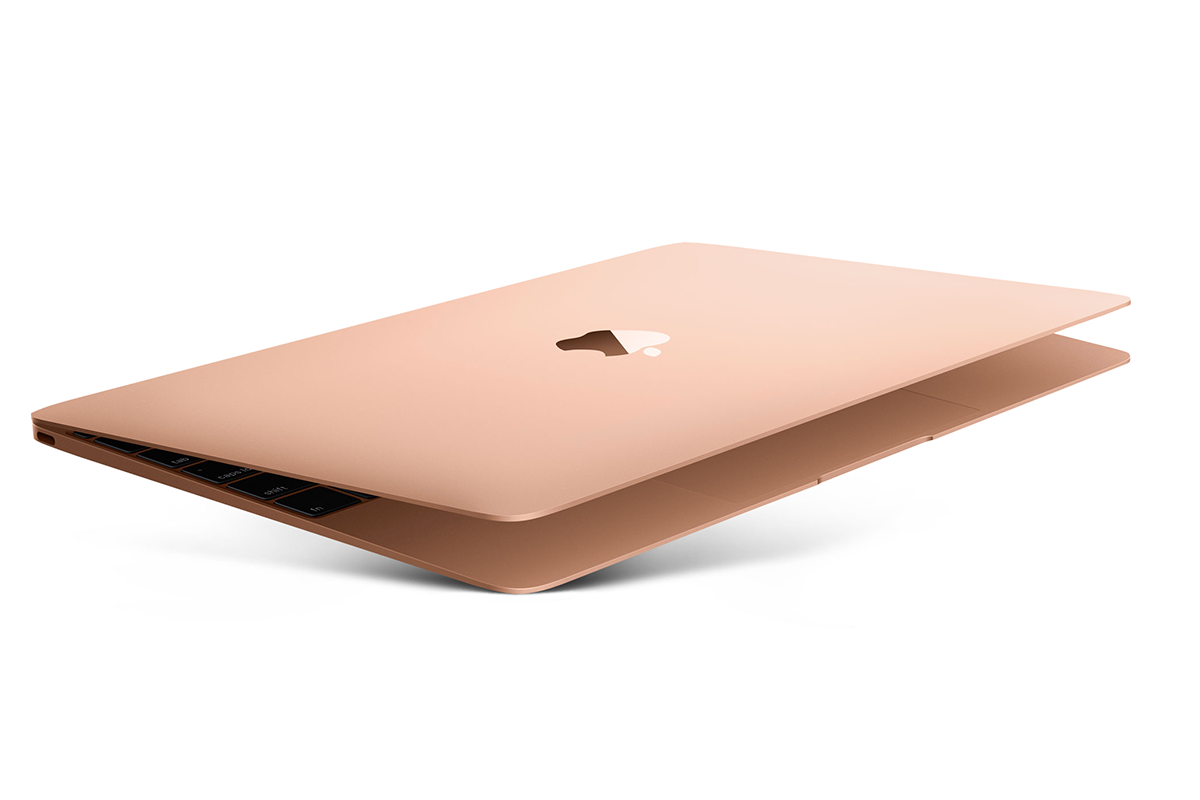
The only other change is cosmetic. The 2016 MacBook comes in Apple’s ‘rose gold’ finish.
Otherwise it remains the same tapered aluminium slab. Closed, it looks like a tablet. The body is 13mm at its thickest point and about the size of an A4 sheet. It weighs 900 grams.
Apple sticks with the 12-inch Retina display. It may look small beside other laptops, but the 2304 by 1440 resolution is excellent. Photos show fine detail and text is crisp, even at small sizes.
Can you feel the force?
The Force Touch trackpad feels great, although few applications make full use of it.
The keyboard divides opinion. It is shallow with little travel and takes time to adjust.
Here’s the odd thing. When using the MacBook, it feels fine. No alarm bells, normal typing speed, perhaps a few extra typos.
Yet returning to my MacBook Air felt like settling into a comfortable chair. I didn’t notice a step down before, but I did notice the step back.
Oddities for now
Many reviewers complain about the lack of ports. You get a headphone jack and a single USB-C port for power and peripherals.
Critics say you need an adaptor to connect a drive or monitor while charging. It looks clumsy and jars with the minimalist design.
That’s true, but in practice I rarely needed it. I don’t use an external screen with the MacBook. Back-ups happen over wireless networks, and I use Bluetooth speakers.
The MacBook pushed me to update old habits. My external USB drive is now a third-level backup behind a NAS and a wireless drive. The adaptor spends most of its time in a drawer.
The future MacBook
In some ways the MacBook is ahead of its time. Users in tightly managed corporate environments may feel constrained. I find it liberating.
For me mobility, simplicity and all-day battery life matter most. One day most laptops will look like this.
