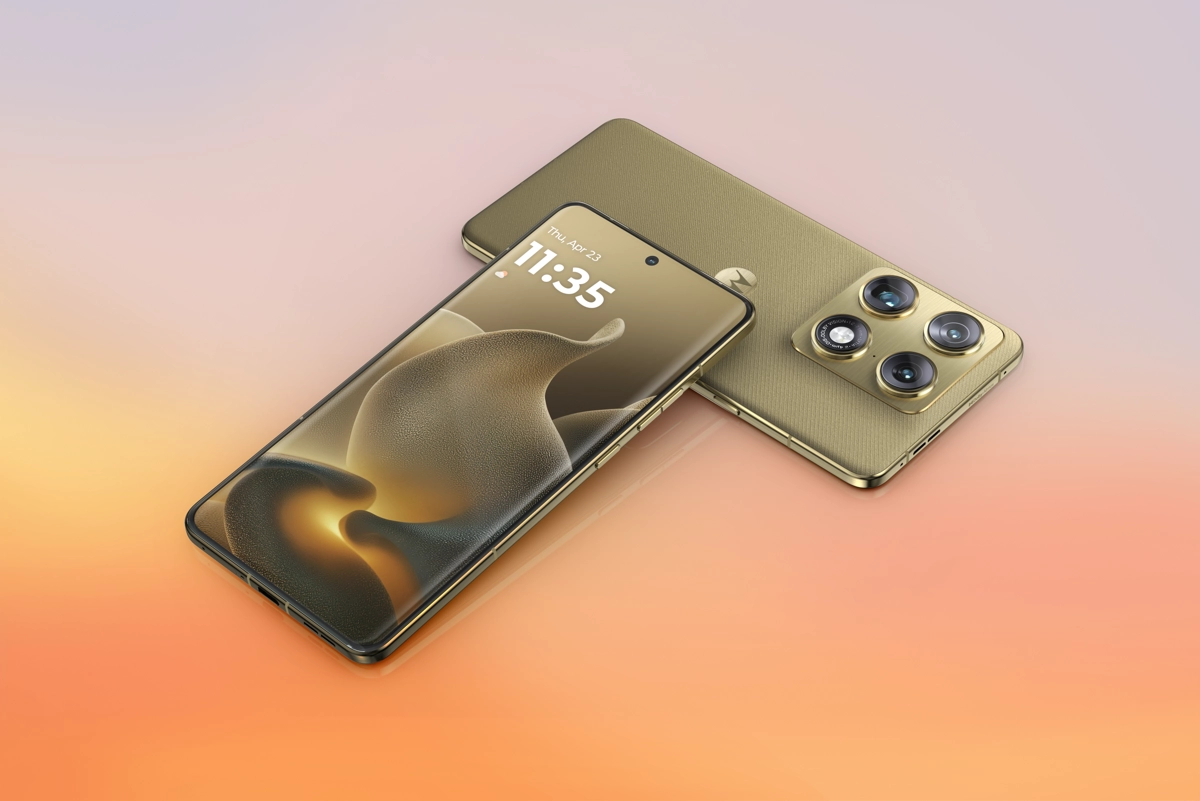
Motorola describes Signature as an “ultra-thin, lightweight flagship phone offering top-tier performance and premium design features at a competitive value”.
While the words are pure marketing, they are not far off the mark. This leaves the question: Is the Signature good enough to justify being considered alongside the best premium phones?
Premium phone
Premium phone handsets have become remarkably good. There are few phones with serious flaws at the top of the market. They all have excellent cameras. They all offer far more features and functions that any of us will ever use. There’s no question the hardware works well.
It’s a segment that is dominated by Apple and Samsung. To compete against those two brands, the Signature needs either to offer something exceptional, or to get close enough to the established leaders while undercutting them on price.
Motorola is trying to do both: the thinness is its standout feature, while the NZ$1700 price puts it well below comparable premium phones.
| How the Signature stacks up | |
|---|---|
| Signature: | NZ$1700 |
| Galaxy S26+: | NZ$2200 |
| iPhone Air: | NZ$2150 |
Any differences between 2026 premium phones are increasingly about trade-offs, refinements, consistency and familiarity. Although the premium phone bar is high, there’s no question that Motorola’s Signature clears it.
That’s not the question this review needs to answer. The real issue is whether Motorola has made the right compromises to deliver that combination of thinness and price.
Motorola’s promotional material uses the term “ultra-thin”. That’s hyperbole. It is merely a little thinner than other phones. That’s still an engineering and design achievement.
It’s also the defining characteristic of the Signature. The question is what does that thinness bring to the party and how much are you prepared to trade off other phone characteristics to get that thinness.
Thinness
Motorola’s specification says the Signature is 6.99 mm thick and weighs 186 g. That’s remarkably precise. You might notice the difference between something that is 7 mm and 8 mm thick, but worrying about the second digit after the decimal point is ridiculous unless you are measuring with callipers.
For comparison, my iPhone 16 Plus is 7.8 mm thick and weighs 199g. The difference in thinness is only detectable when the two are next to each other. Out in the wild the Motorola doesn’t feel any thinner or lighter: It just feels normal. I don’t have a Galaxy S26+ to compare, but its dimensions are 7.3 mm and 190 g, which means any difference is less pronounced.
Against the iPhone 16 Plus, the Signature is:
- 0.81 mm thinner
- 13 g lighter
- about 10 percent thinner
- about 6.5 percent lighter
That 13 g does not amount to much when you’re dealing with a roughly 190 g phone.
Camera bump
The 6.99 mm thickness applies to the phone body. That’s not the maximum thickness of the device. A camera bump covering roughly 20 percent of the phone’s rear adds considerably to that.
Not having callipers to hand, I measured with a ruler to find the phone is around 10 mm thick where there are lenses. While it’s still thinner than the iPhone 16 Plus and its camera bump, that’s a lot thicker than 6.99 mm.
In other words, extraordinarily thin is more impressive on paper than in the hand. A few years ago 6.99 mm would have turned heads. Today it is just a statistic.
Trade-off
Having established the thinness is less of a plus point than it might seem, what about the flip side of the equation? Are there trade-offs when compared with other premium phones?
The potentially most serious trade-offs are how the phone’s thinness affects the experience.
There are two areas of concern. First, the slim case may not have enough surface area to adequately dissipate heat from the Snapdragon 8 Gen 5 processor under extreme conditions. I tested this using the 3DMark app and found the stability percent dropped to 67.6 percent, which means considerable thermal throttling. The phone lost a third of its graphical rendering capability.
During the test, the temperature climbed from 30C to 45C and the back of the phone became very hot. The battery drained about 11 percent in 20 minutes.
In practice, the Motorola Signature trades some performance for its slimness. This isn’t a huge deal: few phone owners push their devices as hard as the 3DMark test. Most get nowhere near that kind of use. But it does mean that keen gamers should look elsewhere.
The other compromise that thinness brings is in the battery. Fitting the 5,200 mAh silicon-carbon battery into a slim case makes for high energy density. We saw what that might mean in practice when the 3DMark test chewed through 11 percent of the battery life in a 20-minute test.
Artificial intelligence
Phone makers feel that AI is now a must-have for a premium handset. Motorola doubles up on AI. There is Motorola’s Moto AI and Google Gemini to choose from. Moto AI has its own dedicated button on the left of the handset. You can’t reprogram its function to, say, act as a camera button.
You can use Moto AI to remember things and to take notes. You can get a summary of incoming messages, create a music playlist and generate images. You need to be signed in to a Moto account to use the Moto AI, just as you need to be signed into a Google account to use Gemini.
I’m not a fan of phone-based AI, but it’s hard to see Moto AI and its associated button as anything more than bullet points to add to a marketing feature list. The button doesn’t solve any real-world problems. If you choose not to sign into a Motorola account, that dedicated button effectively becomes dead weight on the side of your phone.
As AI systems go, Moto AI is fine. But it feels superfluous when Google Gemini is just a click away.
Camera
The triple 50 MP camera system delivers crisp, vibrant photos in daylight, but relies heavily on generative AI processing at higher zoom levels. It’s a dependable everyday setup, though it lacks the absolute night-mode consistency of top-tier rivals.
None of this matters if you’re a casual photographer. The images are more than good enough for most purposes. If you want more from a phone camera you should look elsewhere and expect to pay a hefty premium for the extra hardware.
Design and fabric finish
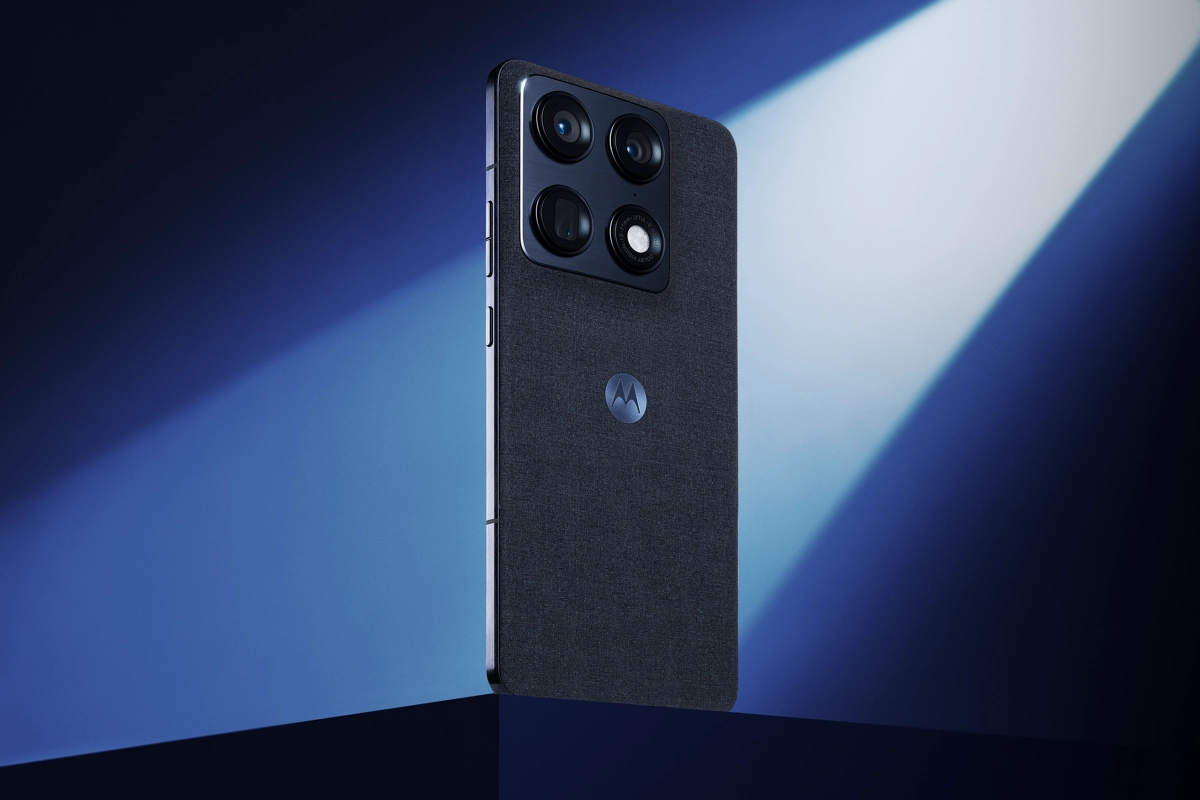
Motorola scores points with its choice of back materials. Instead of the slippery, fingerprint-prone glass or plain matte aluminium found on almost every other premium phone, the Signature uses a textured, linen-feel weave finish. The review model’s weave is a military green colour.
This feels comfortable and more secure to hold than its competition. Whether that finish holds up over years of absorbing skin oils, sweat and Lord knows what else remains an open question. The Apple FineWoven case I temporarily used with my iPhone was ruined when I answered a call after eating hot chips.
Verdict: Motorola Signature
At the top of the page, the question asks: is Motorola’s Signature good enough to justify being considered alongside the best premium phones? It’s a very good phone. But in 2026, being a very good premium phone only gets you into the game.
The Signature’s thinness is impressive, but less important than Motorola’s marketing suggests. It feels normal within hours.
What matters more is the $1700 asking price: you get a lot of premium phone for considerably less than the leading alternatives. For me, the compromises are acceptable at that price. They mean the Signature is a compelling alternative rather than a direct competitor to flagships from Apple and Samsung.
