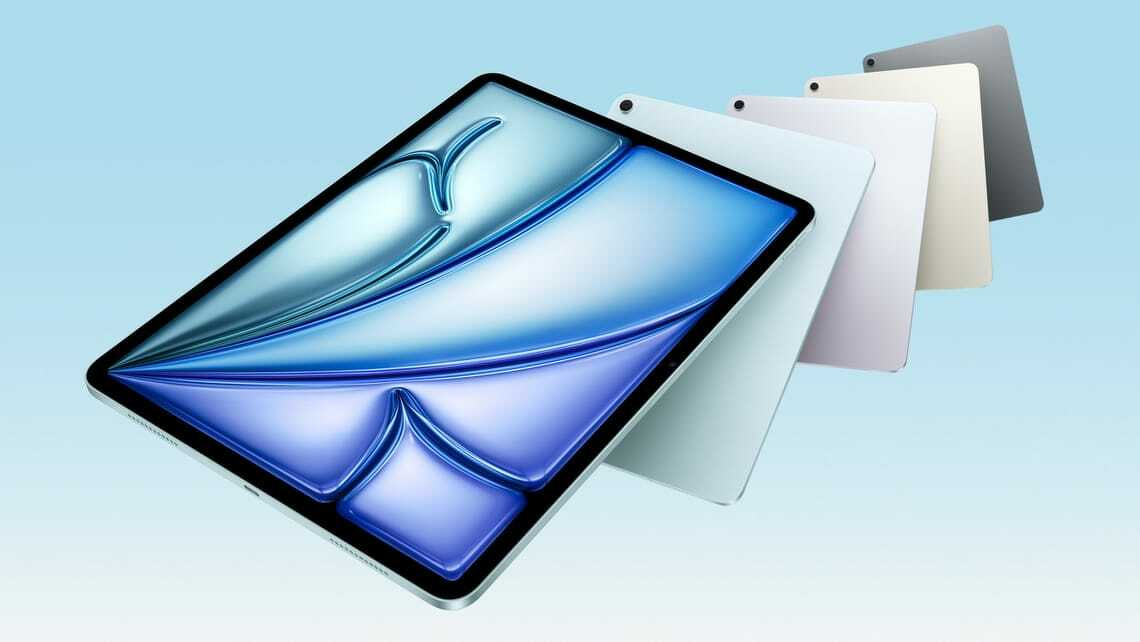
From March 2025: Sitting between the entry-level iPad and the iPad Pro, Apple’s iPad Air continues to hit the sweet spot between price and performance. In 2025, that balance makes it the best tablet for anyone who wants to do more than basic browsing, viewing and listening, but does not need top-tier power.
This review looks at how the iPad Air performs as a tool for business, creativity and education.
Seventh-generation iPad Air at a glance
| For: | Fast M3 processor performance, great new optional keyboard, good screen and camera. |
| Against: | Higher storage options are expensive. |
| Maybe: | It’s the cheapest way to get Apple Intelligence on an iPad, but that’s not as exciting as it might sound. |
| Verdict: | Apple’s best balance between features, performance and price. A good upgrade from older iPads, less so from the 2024 iPad Air. |
| Price: | Base model 11-inch iPad Air with 128 GB of storage is $1200, 256 GB is $1400, 512 GB is $1800, 1TB is $2200. Add $300 for cellular. |
This review is based on the blue 11-inch model with 1TB of storage and cellular connectivity.
A speed bump, but still the right choice
Apple’s seventh-generation iPad Air is not a dramatic update. The move to the M3 processor is a classic speed bump rather than a reinvention.
Even so, it remains the best choice for buyers who need a capable, portable tablet for creative work, study or business tasks.
Performance is around 20 percent better than last year’s model. It is also a clear step up from older iPads, including devices powered by the A12X Bionic chip. While the latest iPad Pro with an M4 processor is faster again, it also costs more. The Air continues to occupy the middle ground.
More than just raw speed
The M3 chip brings hardware-accelerated ray tracing, which improves performance in games and graphics-intensive applications.
For most users, this will not be the deciding factor, but it does underline how far the Air has moved into territory once reserved for professional devices. Only the most demanding creative workloads now require an iPad Pro.
Despite its name, the iPad Air is not the thinnest or lightest tablet in Apple’s range. The difference is marginal, but the Pro models now hold that distinction.
Screen
Apple offers the iPad Air in 11-inch and 13-inch sizes. The larger display is a better fit for watching video or working with complex apps, but the 11-inch model remains practical and portable.
In everyday use, the smaller screen does not feel like a compromise. It handles streaming, browsing and even live sports comfortably, and works well with AirPlay when sending content to a television.
The display uses an LCD panel rather than Mini LED. It is bright enough for most situations, although in strong sunlight you may need to push brightness to its limit. For most users, this will not be an issue.
Battery life
Apple rates the iPad Air at around 10 hours of battery life for web browsing or video playback. In practice, that figure holds up.
A full day’s use on a single charge is realistic. Demanding apps may reduce that slightly, but not enough to cause concern in day-to-day use.
iPad Air versus MacBook Air
At NZ$1200, the base model iPad Air overlaps with the MacBook Air. Once you add storage, accessories and cellular, the price can climb quickly.
A fully specified iPad Air with 1TB of storage, Magic Keyboard and Apple Pencil can approach NZ$3000. At that point, you are in MacBook Pro territory.
The choice comes down to how you want to work. The iPad Air offers flexibility and portability, while a MacBook delivers a more traditional computing experience. There is no shortage of options at this price point.
Who should buy the iPad Air?
Like any iPad, the Air is excellent for reading, browsing, streaming and social media. If that is all you need, the standard iPad will do the job for less money.
The iPad Air comes into its own when you move beyond those basics. It is better suited to productivity, creative work and multitasking.
Apple Intelligence
The iPad Air is the entry point for Apple Intelligence on iPadOS. The base model iPad does not support these features.
At present, this is not a strong reason to upgrade. Apple Intelligence remains limited and does little to transform the experience. That may change over time, but today it feels more like a foundation than a finished product.
A capable writing machine
The iPad has long been a strong device for writing. The iPad Air improves on that.
The extra performance is not always noticeable when typing, but it helps when switching between apps, researching or managing notes alongside a document.
More importantly, the iPad Air supports Apple’s better keyboard.
Magic Keyboard
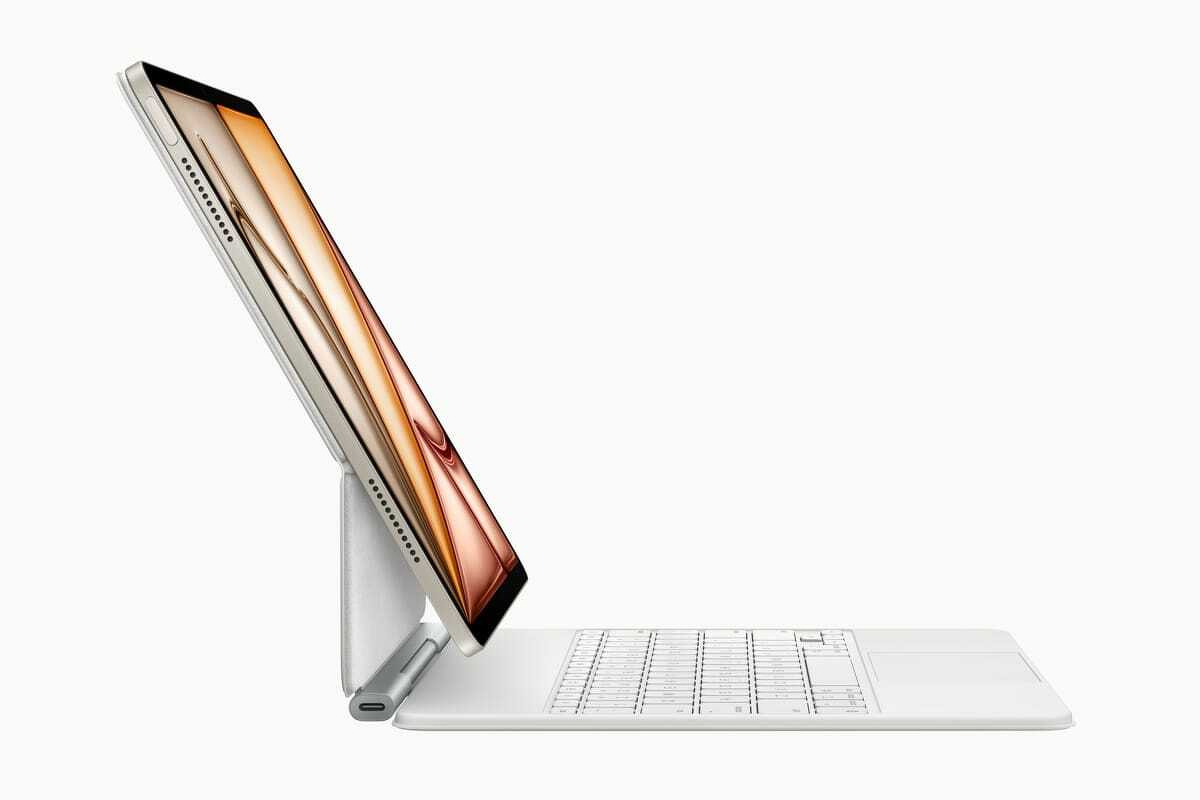
The Magic Keyboard for iPad Air is expensive, but it transforms the device. Paired together, you get much of the functionality of a laptop with the flexibility of a tablet.
For serious writing or productivity work, it is close to essential. It turns the iPad Air into a credible alternative to a traditional computer.
Music and creative work
For creative applications, the M3 processor makes a significant difference.
Apps like Logic Pro, Final Cut and Photoshop run comfortably on the iPad Air. Compared with older iPads, there is far more headroom for complex projects and processor-intensive plugins.
In music production, this is particularly noticeable. Projects that would struggle or require track freezing on older hardware run smoothly on the M3 iPad Air. It takes a far more demanding workload to reach the system’s limits.
The same applies to apps like FL Studio Mobile, where performance remains consistent even under heavier loads.
If your focus is music production, the 13-inch model is worth considering. The extra screen space makes complex arrangements easier to manage.
Verdict
The iPad Air with M3 is not a radical update, but it does not need to be.
It remains the best-balanced tablet in Apple’s range, offering enough performance for almost all users at a more accessible price than the iPad Pro.
It is not worth upgrading from last year’s M2 model. The differences are too small to justify the cost. For anyone using an older iPad, however, the jump in performance and capability is substantial.
For students, creators and professionals who value portability, the iPad Air is the standout tablet choice in 2025.
